
Originally published in Chromakey #8
(Pencil Tip Publishing, October 2024, editor: Bob Furnell)
“And what about that mute servant, Hare?
He’s right out of some kind of horror story.”
—Barnabas Collins and the Mysterious Ghost
Though conceived as a modern retelling of Charlotte Brontë’s Jane Eyre, Dark Shadows became a veritable monster-fest of vampires, werewolves, ghosts, witches, warlocks, zombies, reanimated beings, disembodied hands and heads, Egyptian mythological creatures, Lovecraftian demons, and more. The writers explored time travel, parallel universes, immortal portraits, dream curses, séances, ancient divination, mesmerism, and other supernatural premises unprecedented on daytime TV. The show lasted for only five years and endured multiple failed reboot attempts. Still, no matter how often it faltered, it arose from the grave repeatedly to haunt anew.
The reason why? Two words: Barnabas Collins.
Barnabas’s arc began a year into the show’s five-year history. The vampire spent two centuries locked in a coffin before being freed by would-be grave robber Willie Loomis, who fell under his thrall. Over time, though, their dynamic transformed from an abusive master/slave relationship to a friendship of mutual respect, once the writers realized how much the audience adored both Barnabas and Willie. That’s when the writers abandoned their original plan to see him fatally staked. It’s when the show began to redeem the monster.
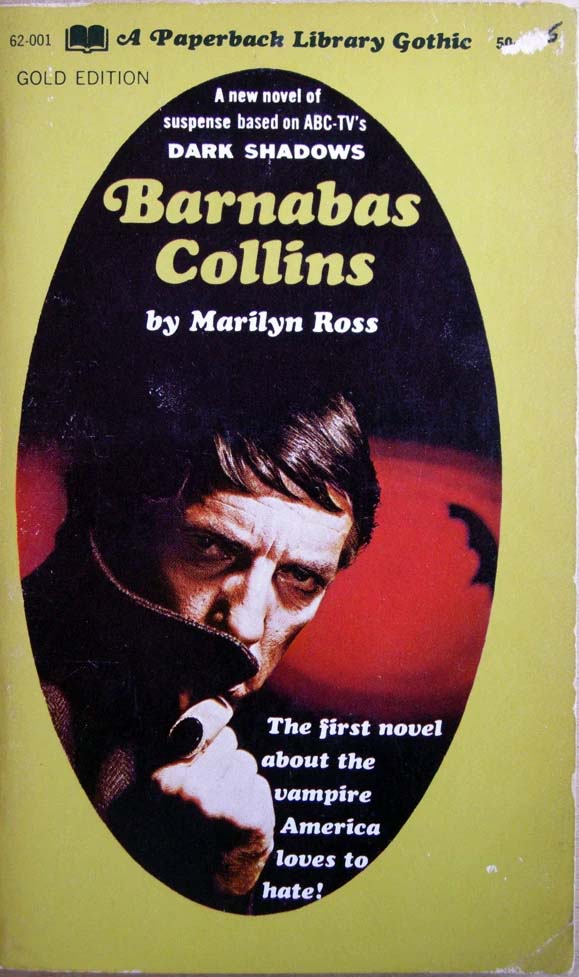
Dark Shadows has repeated Barnabas’s narrative—Josette duPrés, Angelique Bouchard, sex appeal, fake bat, casket, Willie, the whole shebang—with television reboots, theatrical films, and even an off-Broadway play. But in one telling, the story played out differently, and it may have secretly involved a real-life grave robber. The vampire remained unbound for the entire two centuries, and his story was told not on screens, but in a set of 1960s pulp novels.
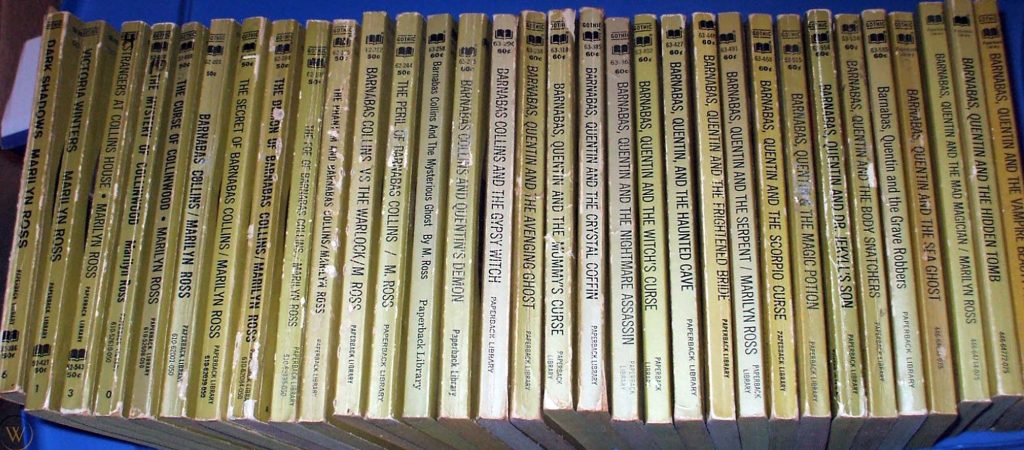
William Edward (W.E.) Daniel Ross (1912–1995) was one of Canada’s most prolific writers. His more than three hundred fifty novels and six hundred short stories were all published within a quarter-century span, under more than twenty pseudonyms, and all during his middle-age and elderly years. If you perused bookstore racks between the 1960s and the 1980s, chances are good you passed several Ross novels, even if you never knew it, given the names on the covers. Among his most frequent nom de plumes was Marilyn Ross (his wife’s name), under which he wrote Dark Shadows books for Paperback Library, with Marilyn as his editor.
Between 1966 and 1972, Ross wrote all thirty-two of Paperback Library’s original Dark Shadows novels, along with a novelization of House of Dark Shadows and outlines for at least two other books: the originally intended tenth novel, The Secret of Victoria Winters, and thirty-third volume, Barnabas, Quentin and the Mad Ghoul. Ross provided Craig Hamrick with notes for #10, so that Hamrick could complete it as a novella, first published in the 1993 fanzine Victoria Winters, then released online in 2004. He further supplied Shirley Stockel and Victoria Weidner with his outline for #33, for publication in A Guide to Collecting Dark Shadows Memorabilia (Collinwood Chronicle, 1992); the outline had previously appeared in a 1986 issue of the fanzine The Eagle Hill Sentinel.

Despite bearing the Dark Shadows banner, Ross’s books were divergent in their approach, and it would not be unreasonable to assume the author had never watched the show he was writing about. It’s clear he was at least familiar with Shadows on the Wall, Art Wallace’s story bible, since the first few books heavily mined its descriptions. But the aired episodes? That’s questionable.
The basic trappings were present: a creepy, spider-infested mansion; main characters Victoria Winters, Barnabas Collins, and Quentin Collins, along with Elizabeth Collins Stoddard, Roger Collins, Carolyn Stoddard, David Collins, and Maggie Evans; and the town of Collinsport, where terrible things routinely happened that would be well suited to a Universal Monsters film. Ross peppered in appearances by Burke Devlin, Joe Haskell, Chris Jennings, Amy Jennings, Julia Hoffman, Timothy Eliot Stokes, and Angelique Bouchard, though rarely did they act or speak like their onscreen counterparts. Though undeniably entertaining, Ross’s Dark Shadows bore little resemblance to the TV masterpiece of Curtis and Wallace, and the cast were wholly different characters.
That was by design, for Ross did not set out to continue the TV show. Rather, he was creating something sufficiently recognizable to sell books, yet unconstrained by what might be taking place on the thirteen-channel boxes that 1960s housewives and children watched while preparing dinner, ironing clothes, and doing homework. As was often the case with classic pulp novels, the Dark Shadows line utilized the same predictable formula throughout: A helpless heroine du jour fell hopelessly in love with Barnabas, who destroyed the monster or villain du jour. But the vampire kept her at arm’s length for her own protection from his cursed existence, and he quietly left in the night, to return someday and meet another breathless beauty in danger. Rinse, lather, repeat—an approach just as sensible with soap as with soap operas.
For modern-day viewers new to the franchise, Ross’s Dark Shadows novels might seem jarringly out of synch with the TV show, but when the line launched, it was the only way for fans to experience more Dark Shadows. There would soon be comic books and newspaper strips, and eventually there would be movies and reruns and more books and audio plays. But in 1966, there were only the daily episodes and Ross’s novels, and their separate continuities gave the author a great deal of creative freedom.
On television, for example, Barnabas had two servants: Ben Stokes in the eighteenth century and Willie Loomis in the twentieth. Yet in the novels, he had a revolving door of one-off protectors and assistants. This included a version of Willie Loomis, both in 1830 and in the 1970s, and we’ll get back to that oddity soon. More than anyone else, though, Ross’s Barnabas was accompanied by a surly, drunken, and foul-looking stooge by the unlikely name of Hare. He was mean-spirited and prone to violence, leading the Collins clan to question why their cousin would employ such a repugnant valet. The answer in the novels was that Hare was unfailingly loyal in protecting Barnabas—but it’s possible that he may also have been connected to a string of real-world murders that plagued nineteenth-century Scotland, and that Barnabas may have been protecting him.
Hare proved to be an excellent companion, protecting Barnabas during the day and doing all the things Willie did on TV: cooking, cleaning, chauffeuring, and so on. He was basically Willie… if Willie were hideous, inebriated, mute, and ready to throttle anyone for no reason. The vampire disciplined Hare when necessary, though he was usually kind to the valet. On one occasion, he even killed the brute, after which Hare came back to life, appearing in many more novels with no explanation for his resurrection.
How he did this is anyone’s guess, though presumably it was due to Barnabas’s ever-expanding abilities in the licensed lore. TV’s Barnabas could become a bat, mesmerize victims with his hypnotic gaze, and ensnare wills by biting necks—the usual vampire shtick. But in the novels and comics, he could propel himself and others through time at will, walk around inside people’s dreams, and perform fantastical feats no vampire had any business doing.
Hare served Barnabas for at least a century in the books without aging, so one might assume him to be a vampire, yet that can be ruled out since the servant walked around in the daylight while his master took a casket nap. The same, oddly enough, was true of Ross’s version of Willie, who on TV was just a normal down-on-his-luck nogoodnik, yet in the books was long-lived like Hare. The more likely answer is that Ross’s Barnabas could make his servants immortal and resurrect them from death. Why? Because on Dark Shadows, anything goes.
The bulldog-faced Hare, who liked to roam around graveyards (keep that in mind in the paragraphs ahead), debuted in Ross’s sixth Dark Shadows novel, Barnabas Collins (1966), which introduced the titular vampire once the publisher transitioned away from focusing on the oft-terrorized governess Victoria. The vitriolic brute then grunted and snarled his way through fourteen additional books set between the 1860s and the 1970s, physically matching how Ross described him in his inaugural appearance:
A moment later there was the pound of unsteady footsteps coming toward the door. And all at once it was thrown open and a purple angry face peered out at her from the dark hall. She almost gasped at the shock of his ugliness. He was short, squat and his features had an apelike cast. Also he was hairy! His heavy black hair came far down on his slanting forehead and his chin showed a stubble of bluish beard. The smell of whiskey on his breath was strong even a distance from him.
His malevolent, bloodshot eyes regarded her with utter hostility. And the thick lips curled to give out a guttural warning. The grunting sound reminded her that he was deaf and dumb. Summoning a forced smile, she offered him the basket. With a gesture of rejection he pushed it away and growled again. And then he slammed the door in her face and she heard his footsteps retreating to the rear of the house.
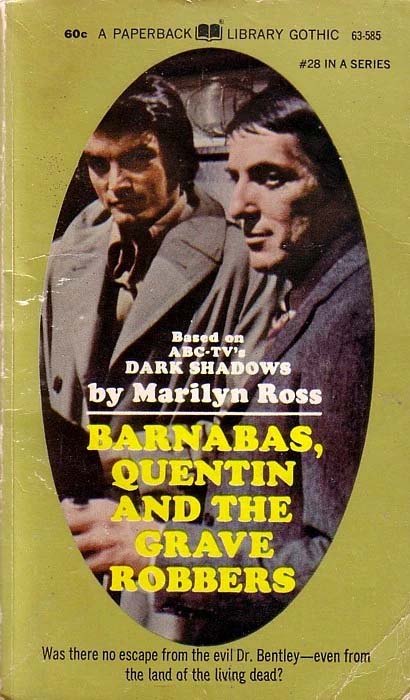
It was amusing how unnecessarily rude Hare, a butler, was to guests, and the novels featuring the vampire’s one-off servants seemed to be missing something without Hare and his rage-filled door slamming. One thing Ross never explored was the diminutive man-brute’s background. Where did Barnabas, a refined and sophisticated gentleman, find this offensive, uncouth oaf, and why did the vampire decide an unkempt, misanthropic alcoholic would make an ideal valet for his mansion? Readers never received an answer, though Ross may have hidden a clue in the twenty-eighth novel, Barnabas, Quentin and the Grave Robbers (1971), and it may have hearkened back to Victorian-era newspaper headlines.
In that book, set in 1830, Barnabas learned about William Burke (no relation to Devlin) and William Hare, a pair of real-life grave robbers, then called “resurrection men,” who had murdered sixteen Edinburgh residents in a ten-month span of 1828 and then sold the corpses to anatomist Robert Knox for dissection. The need for cadavers was high in the early nineteenth century, when a great many medical discoveries were taking place in Europe. While Scottish law limited experimentation to corpses derived from prison deaths and suicides, as well as the bodies of orphans and foundlings, a widespread cadaver shortage resulted in a surge of body snatching, with resurrection men scrambling to keep the supply in synch with the demand.
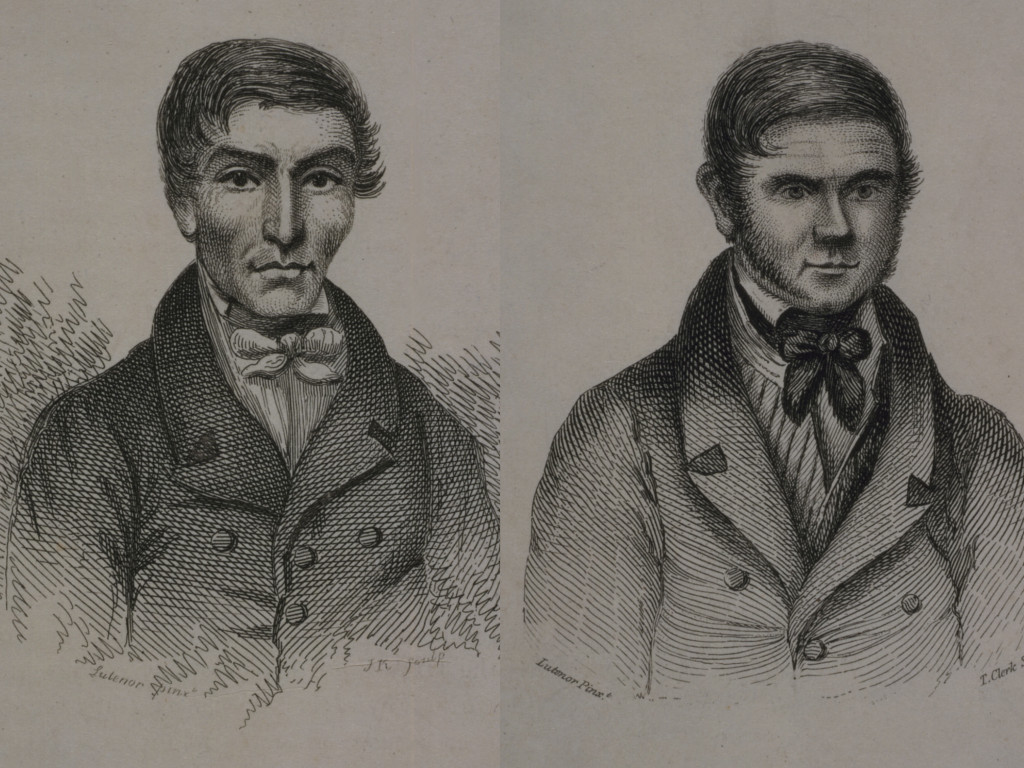
The real Burke and Hare found an effective—albeit macabre—method for increasing the number of available bodies: not waiting for them to die. They killed lodgers living in Hare’s house, until their murder spree ended when someone reported them to the police. With a lack of evidence, prosecutors granted William Hare immunity in return for his testimony against his partner. William Burke was thus convicted and hanged—his corpse dissected and displayed, in a wonderful example of poetic justice—while the friend and criminal partner who’d betrayed him walked away a free man.
What happened to the real Hare following his release remains a mystery, with unverified rumors suggesting his whereabouts thereafter. For all intents and purposes, he seems to have vanished. From a Dark Shadows perspective, this is where things get interesting. When Barnabas heard about the resurrection men in Ross’s novel, he was traveling not with Hare, but with Willie, and the book was set before Hare’s fifteen appearances. Subsequent stories featuring Willie would take place around 1970, yet here he was, serving Barnabas fourteen decades earlier, indicating the Willie of the novels was just like Hare… or, perhaps, that Ross had swapped him out with Hare at the last minute.
Can it be merely a coincidence that in the same book in which Ross suddenly stopped using the fictional Hare and replaced him with Willie, he also incorporated the historical Hare—and had Barnabas present to hear a conversation about him? The fact that Willie was brought in at the precise moment when Ross had characters discussing the Burke and Hare murders seems far from coincidental. More likely is that Ross made a conscious decision to use Willie this time instead of Hare, to sidestep the confusion of having the servant and the murderer share the same name, potentially making readers think the two Hares were the same person. Yet maybe that was exactly the point. Maybe they were the same person—and maybe Ross discreetly hoped his readers would realize it.
In 1995, the science fiction television show Babylon 5 aired the episode “Comes the Inquisitor,” in which Captain John Sheridan and Ambassador Delenn met a strange man wearing anachronistic Victorian-era clothing, who subjected them to interrogation on the orders of the godlike Vorlons. His name was Sebastian, and he’d resided in London centuries prior. Although he served the heroes’ cause, Sebastian was capable of profound cruelty, and by the episode’s end the audience learned why: he had once been the serial killer Jack the Ripper.
The Vorlons had abducted Sebastian after learning of the Whitechapel slayings, and they’d granted him immortality as their inquisitor, allowing him to serve the greater good while humbling him as punishment for his crimes. The Ripper had been forcibly shown the error of his ways, and his sadistic nature was now being put to a better purpose, his every action controlled by beings to whom he was loyal and powerless to resist. The non-aging Sebastian served the Vorlons for centuries, resurrected when needed, and though he believed in the righteousness of their purpose, he lived in misery, unable to die and haunted by the mistakes of his past.
Could this be what happened to William Hare? Could Ross’s Barnabas, upon learning of the Burke and Hare murders, have tracked down the killer, brought him under his thrall, and granted immortality in return for loyalty? Could this explain the mystery of the real Hare’s disappearance, as well as the contradictions of the fictional Hare’s chronology? Could Hare have played out the same dismal penance as Sebastian, humbled into eternal submission by a supernatural entity willing to give him a second chance? Might it be that the former resurrection man had himself become a man resurrected?

The questions run deeper still: Could the Ross version of Willie (short for William) have been similarly trapped in endless servitude to Barnabas? Might he have been Hare, his appearance and speech capability altered? And what about all those one-off servants? Might they all have been the resurrected resurrection man?
Granted, Ross’s descriptions of the fictional Hare did not match artistic renderings of his historical counterpart from Burke’s trial, and he and Willie looked nothing alike. Still, in the show’s mythology it was not uncommon for individuals to be changed via sorcery or science, distorting their features to horrific proportions. Heartthrob Quentin Collins was rendered hideous thanks to the miracle of 1960s makeup. So were Barnabas Collins, Angelique Bouchard, Josette duPrés, Chris Jennings, Jeremiah Collins, Cyrus Longworth, and Evan Hanley. They were all attractive until magic—the supernatural kind and the Hollywood makeup kind—made them ugly.
Perhaps Barnabas, in breaking the will of the depraved grave robber, turned William Hare into a squat, hairy beast to keep people from recognizing him. If so, there’s a historical precedent, for upon being set free, the real Hare was mobbed by hundreds of outraged citizens protesting the injustice that had allowed a mass murderer to go unpunished, forcing him to flee the scene and vanish from history. There’s also a Dark Shadows precedent, for in making Willie his slave on the television serial, Barnabas chose a dangerous man as his servant, and he broke the latter’s will so thoroughly that the one-time predator was rendered cowering and weak-willed, like a frightened little rabbit… or a hare.

Intriguingly, there’s a stronger in-universe precedent. It involves Jack the Ripper, and it’s not dissimilar to Babylon 5’s use of that infamous killer. Dark Shadows/Vampirella, a comic book miniseries from Dynamite, revealed that the Ripper had become the servant of the vampire Elizabeth Báthory. Like the historical Hare, the real Ripper seemingly vanished from Whitechapel during the Victorian era without a trace—and like the fictional Hare, Dynamite’s Ripper no longer aged and came back to life after being slain.
The parallels didn’t stop there. As with William Hare, Báthory was a real villain from history. The Hungarian noblewoman (1560–1614) was imprisoned for torturing and killing hundreds of girls and women, and she was among the most prolific female murderers of all time. There are legends that she engaged in vampiric activities and bathed in blood, and historians cite her as one of Bram Stoker’s inspirations for Dracula, the novel that in turn inspired Barnabas’s creation. Dracula even showed up in Dark Shadows/Vampirella, with Barnabas and his predecessor meeting in the final issue.
While Barnabas was introduced on TV and in the novels as a malevolent presence (he was, after all, a vampire), he was also an avenging spirit who vanquished evildoers and protected the innocent from harm… well, the harm he himself was not doing… often with a flair for the dramatic. Humbling a brutal killer who’d escaped justice by making him ugly, mute, hairy, and subservient would not have been out of character for Ross’s Barnabas. The self-hating vampire may even have been punishing himself, with Hare serving as a hideous mirror image of the cursed undead killer who could never see himself reflected in mirrors.
Beauty often turned beastly on Dark Shadows, and that fate may have befallen the resurrection man William Hare. Readers will likely never know for certain whether it was Dan Ross’s intention to connect the Hare of mystery and the Hare of history, but the signs are there that the author knew what he was doing when he slyly mentioned the real-life murders in Barnabas, Quentin and the Grave Robbers. That was no mere coincidence. Readers were meant to intuit more: Barnabas had redeemed the monster. Ross had worked the hirsute Hare brute into most of the novels, but after book twenty-eight, Willie became Barnabas’s go-to servant protector, with Hare never mentioned again.
It isn’t difficult to imagine the author bidding farewell to his macabre Hare, while subtly making him the real-life Hare. If so, then Ross used pen and typewriter to perform a metaphorical chroma key compositing of fact and fiction, offering savvy readers a winking hint at the untold secret behind Barnabas’s resurrected manservants—a secret found not in the musty, yellowing pages of 1960s pulp novels, but in the dark shadows of Victorian history.
Thanks to Jeff Thompson and Danielle “Penny Dreadful” Gelehrter for their assistance.
